
IB PYP Morocco: Inquiry-Based Learning Explained for Parents
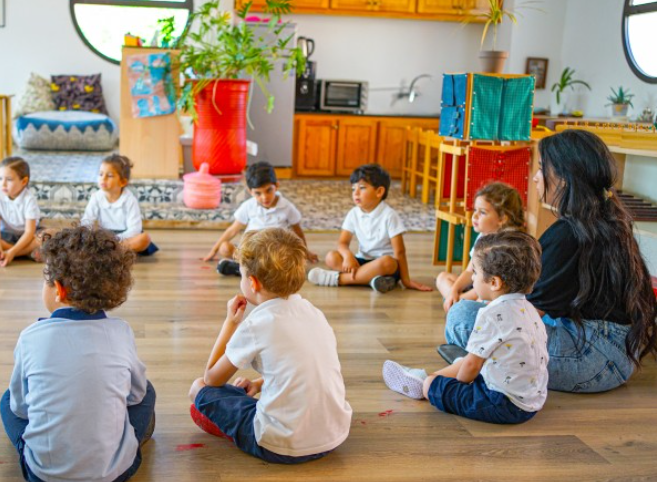
One of the most common questions from parents new to IB PYP Morocco schools is: “What exactly is inquiry-based learning?” The term appears in every school brochure, every teacher presentation, and every PYP description — but it can feel abstract if you have not experienced it firsthand.
This article provides a clear, practical explanation of inquiry-based learning as it is practiced in IB PYP schools in Morocco, so you can understand what your child is experiencing, why it is effective, and how you can support it at home.
What is Inquiry-Based Learning?
Inquiry-based learning is an educational approach that positions the learner’s questions, curiosity, and investigation at the center of the educational experience. Rather than the teacher transmitting information and students absorbing it, inquiry-based learning asks students to:
- Identify what they want to know and why it matters
- Gather and evaluate information from multiple sources
- Form hypotheses and test them through research or experimentation
- Construct meaning and understanding from what they discover
- Communicate and share their learning with others
In IB PYP Morocco classrooms, this process is not left to chance. It is structured, supported, and scaffolded by highly trained teachers who guide students through increasingly sophisticated levels of inquiry as they progress through the programme.
The Four Types of Inquiry in the IB PYP
Not all inquiry is the same. The IB PYP distinguishes between four types of inquiry that appear at different stages and in different contexts:
1. Structured Inquiry
The teacher provides both the question and the method; students explore within a defined framework. This is common in younger year groups or when introducing a new concept. Example: “Follow these steps to discover what plants need to grow.”
2. Guided Inquiry
The teacher provides the question; students determine their own methods of investigation. Example: “Why do some materials float and others sink? Investigate and find out.”
3. Open Inquiry
Students generate both the question and the method. This is the most sophisticated level and forms the basis of the PYP Exhibition. Example: A Year 5 student choosing to investigate plastic pollution in the Ourika Valley and designing their own research process.
4. Collaborative Inquiry
Students and teachers inquire together, with the teacher modeling their own thinking processes. This approach is particularly powerful in IB PYP Morocco schools because it demonstrates that learning is a lifelong process, not something that ends when you become an adult.
What Inquiry-Based Learning Looks Like in the Classroom
If you visit an IB PYP Morocco classroom mid-lesson, you might observe:
- Students working in small groups, debating and discussing ideas
- One group at a computer researching a topic, another handling materials and experimenting
- The teacher moving between groups, asking probing questions rather than providing answers
- Student-generated questions displayed on the classroom wall alongside an inquiry board
- A range of materials — books, artifacts, images, data — set out for students to explore
It can look less structured than a traditional classroom, but this is intentional. The PYP teacher’s skill lies in designing environments and experiences that provoke deep thinking — and then stepping back to let students think.
Common Parent Questions About Inquiry-Based Learning
“Does my child still learn the fundamentals — reading, writing, and maths?”
Absolutely. The IB PYP places strong emphasis on literacy and numeracy. Reading, writing, grammar, and mathematics are all explicitly taught in IB PYP Morocco schools — but they are taught in meaningful contexts that connect to inquiry, rather than as isolated drill exercises.
“How does the teacher know what my child has learned?”
Teachers in IB PYP Morocco schools use multiple assessment tools — observations, portfolios, student reflections, conversations, and formal tasks — to build a comprehensive picture of each child’s understanding. This is often more informative than a single test score.
“What if my child struggles to direct their own learning?”
Not all children immediately thrive with open-ended inquiry. Skilled PYP teachers provide scaffolding and structure for learners who need more support, gradually releasing responsibility as confidence and skills grow. If you have concerns, discuss them openly with your child’s teacher.
How to Support Inquiry-Based Learning at Home
The most powerful thing parents can do to support IB PYP Morocco learning at home is to model inquiry themselves:
- Say “I wonder…” — When you encounter something unknown, say it aloud: “I wonder why that happens. How could we find out?”
- Visit libraries and bookshops together — Cultivate a culture of seeking knowledge from multiple sources
- Ask open questions — Instead of “How was school?” try “What were you curious about today?”
- Engage with units of inquiry — Ask your child what they are currently investigating at school and explore related topics together at home or in the city
- Celebrate questions as much as answers — Reinforce that asking good questions is a sign of intelligence, not ignorance
Conclusion
Inquiry-based learning is not a passing educational trend — it is a research-backed approach to developing the thinkers, problem-solvers, and innovators the world needs. At IB PYP Morocco schools, this approach is implemented with skill, structure, and genuine passion. Understanding what it means equips you as a parent to be a true partner in your child’s extraordinary learning journey.
Prêt(e) à en savoir plus ? Découvrez les programmes Montessori et IB proposés par Planète Montessori et offrez à votre enfant une éducation qui lui ressemble.