
Understanding Morocco’s Private School System: Structure and Options
To choose wisely among Morocco’s education options, families benefit from understanding how the Morocco private school system is structured. Accreditation standards, educational levels, official oversight, and quality variation all shape what schools can offer and how they operate. This guide provides the foundational system-level knowledge that informs individual school selection.
How Morocco’s Private School System is Regulated
The Morocco private school system is overseen by the Ministry of National Education, which sets minimum standards, accredits institutions, and monitors compliance. However, private schools have considerably more autonomy than public institutions. They can choose curricula (within legal bounds), set their own admission standards, determine class sizes, and design their pedagogical approaches.
This autonomy is a double-edged sword. It enables pedagogical innovation and allows schools to cater to diverse family preferences. Simultaneously, it means that quality variation among private schools in Morocco is significant — from genuinely excellent institutions to mediocre or frankly poor schools. Due diligence in school selection is therefore essential.
Accreditation and Official Recognition
All private schools in Morocco must register with the Ministry of Education. However, accreditation status varies. Some schools hold full accreditation as official examination centers. Others operate with basic provisional recognition. International curricula like IB and Cambridge have their own accreditation processes independent of Moroccan government approval.
Always verify that any private school in Morocco you consider holds current accreditation appropriate to its level and curriculum. This documentation confirms that the school meets minimum standards and that its diplomas will be officially recognized.
Educational Levels Within Morocco’s Private School System
The Morocco private school system organizes education into distinct levels, mirroring the public system:
- Nursery/Preschool: ages 2.5–5 (optional, not mandatory)
- Primary School: ages 6–11 (mandatory, 6 years)
- Lower Secondary (Collège): ages 12–14 (mandatory, 3 years)
- Upper Secondary (Lycée): ages 15–17 (optional, 2 years)
In the Morocco private school system, students may attend the same school from nursery through upper secondary (covering ages 2.5–17), or they may transfer between schools at transition points. Some schools specialize in early years, others in secondary education, others offer the full span.
Size and Diversity Within Morocco’s Private School System
The Morocco private school system includes everything from small, neighborhood schools serving 100–200 students to large institutions with 1,500+ pupils. Both models exist across Morocco’s major cities and secondary towns. Small schools often emphasize community and individual attention; large schools offer more facilities and specialized services.
Similarly, the Morocco private school system encompasses schools serving primarily affluent Moroccan families, those catering to expatriate communities, and others serving working and middle-class families seeking affordable private education. There is remarkable diversity in the system, which is ultimately positive for family choice.
Quality Variation Within the Morocco Private School System
One reality of the Morocco private school system is significant quality variation. Not all private schools in Morocco deliver superior outcomes to public schools. Some private institutions are genuinely excellent. Others are mediocre or poor. The “private school” label alone guarantees nothing.
Rigorous school evaluation — examining credentials, visiting classrooms, speaking with parents, and reviewing student outcomes — is essential. Our school evaluation checklist helps you distinguish genuinely excellent private schools from lesser alternatives within the Morocco private school system.
Accessing System-Level Information About Private Schools in Morocco
The Moroccan Ministry of National Education maintains records of accredited private schools. While their public database is somewhat limited, official ministry websites provide foundational information. Additionally, educational consultants and school-listing services provide more comprehensive overviews of options across the Morocco private school system.
Planète Montessori: A Model Within Morocco’s Private School System
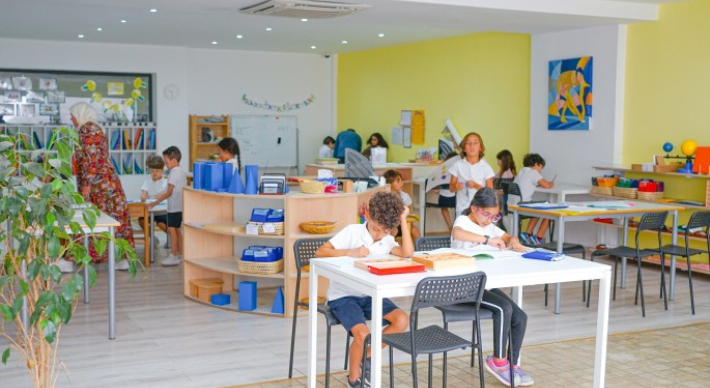
Planète Montessori operates within the Morocco private school system while offering a distinctly different educational philosophy than traditional private schools. Our Montessori approach, certified educator team, small classes, and international recognition make us a distinctive model within Morocco’s broader educational landscape.
While the Morocco private school system includes many options, Planète Montessori represents a particular commitment to child-centered pedagogy, bilingual development, and holistic education. Explore our position within Morocco’s educational landscape.

Conclusion
Understanding how the Morocco private school system is structured, regulated, and internally diverse helps families make informed choices. The system offers genuine options and alternatives to public education, but this diversity also requires careful evaluation. The Ministry of National Education website is your official starting point for system-level information. Begin your research there, then supplement with school visits and parent consultation as you evaluate specific institutions within Morocco’s vibrant private education sector.