
Introduction:
Finding the right academic environment is challenging for any parent, but for families of children with Special Educational Needs (SEN), the stakes are significantly higher. When searching for an International school in Morocco, the glossy brochures often promise “inclusion,” but what does that look like in practice?
True inclusion is not just about admitting a student; it is about ensuring they thrive. Whether your child has dyslexia, ADHD, or requires mobility support, the school’s infrastructure and ethos must be robust.
In the evolving landscape of Moroccan private education, distinctions between genuine support and mere marketing are crucial. Here are the 6 vital practices you must look for to ensure your child receives the education they deserve.
1. Individualised Education Plans (IEPs).
The cornerstone of SEN support is the Individualised Education Plan (IEP). In a reputable International school in Morocco, this should be a formal, written document, not a casual verbal agreement.
An IEP outlines specific learning goals, required accommodations (such as extra time in exams or a laptop for writing), and criteria for success.
What to verify:
-
Is the IEP reviewed termly?
-
Do all subject teachers have access to this document?
-
Are parents actively involved in setting the targets?
If the school cannot show you a template of their IEP process, they may not be equipped to handle specific needs professionally.

2. Specialist Staffing in an International School in Morocco:
Inclusion requires expertise. A general classroom teacher, no matter how dedicated, needs the support of specialists.
Top-tier schools employ a dedicated SEN Coordinator (SENCO) who oversees the department. Furthermore, they should facilitate the presence of “Shadow Teachers” or Learning Support Assistants (LSAs) for students who require one-on-one attention.
When visiting an International school in Morocco, ask to meet the SENCO. Their qualifications and experience (often from the UK or US systems) are a good indicator of the school’s commitment to inclusion.
3. Differentiated Learning in the Classroom:
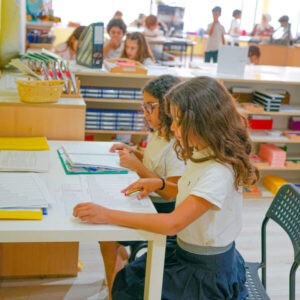
Differentiation is the art of teaching the same concept in different ways to suit various learning styles.
In a rigid system, every child must learn at the same pace. In a truly inclusive International school in Morocco, teachers adapt their methods. This might mean providing visual aids for a child with auditory processing issues or breaking down complex tasks into smaller steps for a student with ADHD.
Observation tip:
-
Look at the walls in the classrooms. Are there visual timetables?
-
Are instructions given in multiple formats (written and verbal)?
4. Accessible Infrastructure and Physical Safety:
Inclusion is also physical. For children with mobility challenges, the architectural layout of an International school in Morocco is a deciding factor.
Many older villas converted into schools in cities like Casablanca or Marrakech may lack elevators or ramps.
Vital checks:
-
Are the upper floors accessible via lifts?
-
Are there accessible toilets on every level?
-
Are sensory-friendly spaces available (quiet rooms) for children who may get overwhelmed by noise?
5. Social Integration and Emotional Well-being:
Children with specific needs are often at higher risk of social isolation or bullying. A leading International school in Morocco will have proactive pastoral care to ensure social inclusion.
This goes beyond the classroom. It involves structured play during breaks, “buddy systems” where older students mentor younger ones, and clear anti-bullying policies that specifically mention disability discrimination.
The goal is to create a community where neurodiversity is celebrated, not just tolerated.
6. Partnership with External Specialists in an International School in Morocco:
No school is an island. The most effective institutions collaborate with external experts.
Does the school allow speech and language therapists, occupational therapists, or child psychologists to visit the child on campus?
An International school in Morocco that opens its doors to your private therapists demonstrates a “child-first” approach. This collaboration ensures that the strategies used in therapy are reinforced in the classroom, creating a consistent support network for the child.
Conclusion: Championing Your Child’s Potential:
Choosing a school when your child has additional needs requires diligence and advocacy.
The landscape of the International school in Morocco sector is improving, with many institutions now adopting world-class inclusion standards. By insisting on these 6 practices, from rigorous IEPs to accessible campuses, you ensure that your child is not left behind.
Every child has the right to learn, grow, and belong.
Ready to discuss your child’s specific needs with our inclusion team?