
Private School Entrance Exams in Morocco: Preparation and What to Expect
Many top private schools in Morocco use entrance examinations as part of their admissions process. These assessments help schools understand student abilities and ensure appropriate class placement. Understanding what to expect and how to prepare reduces anxiety and increases success. This comprehensive guide demystifies private school entrance exams in Morocco.
Which Private Schools in Morocco Require Entrance Exams?
Entrance examination requirements vary significantly across private schools in Morocco. Highly selective institutions — particularly international schools and academically rigorous traditional schools — typically require testing. Less competitive schools may admit based on school reports and family interviews alone.
Always ask during your school inquiry whether the private school in Morocco you are considering requires entrance examinations. If so, ask for sample papers or detailed descriptions of the test content and format.
When Entrance Exams Are Most Common
Private school entrance exams in Morocco are most prevalent at transition points: entry to primary school (age 6), entry to lower secondary (age 12), and entry to upper secondary (age 15). Some schools test at every entry point; others only at major transitions.
What Private School Entrance Exams in Morocco Actually Assess
Rather than measuring intelligence or innate ability, private school entrance exams in Morocco typically assess academic skills relevant to the level of entry. For primary entry, expect:
- Language skills: oral comprehension, vocabulary, listening to stories
- Numeracy: counting, basic number recognition, simple problem-solving
- Fine motor skills: pencil control, ability to copy shapes or letters
- Social-emotional readiness: ability to follow instructions, take turns, separate from parents
For secondary entry, private school entrance exams in Morocco typically include:
- Mathematics: arithmetic, basic algebra, problem-solving
- Language: reading comprehension, writing, language mechanics
- Reasoning: logical thinking, pattern recognition, spatial reasoning
- General knowledge: science, social studies, current events
How to Prepare Your Child for Private School Entrance Exams in Morocco
Excessive pressure and intensive “test prep” are counterproductive for young children. However, reasonable, age-appropriate preparation helps. Here are evidence-based strategies for preparing for private school entrance exams in Morocco.
For Primary School Entry (Age 5–6)
At this age, focus on natural, playful development rather than formal “studying.” Read together daily. Play board games that develop number sense and strategic thinking. Practice speaking and listening. Ensure good sleep, healthy diet, and physical activity. Visiting the new school and meeting the teachers helps children feel comfortable and confident.
For Secondary Entry (Age 11–12)
For older students, more direct preparation is appropriate. Work through sample math and language problems at a relaxed pace. Read challenging texts together. Play strategy games. Most importantly, maintain perspective: these exams assess current academic level, not ultimate potential. Honest assessment actually helps schools place students appropriately.
Managing Test Anxiety
Reassure your child that private school entrance exams in Morocco are not life-or-death assessments. Normalize that some questions might be hard. Emphasize effort and honesty over performance. Maintain normal routines; avoid last-minute cramming. Most importantly, model calm confidence. Children absorb parental anxiety, so managing your own stress matters.
The Assessment Day and Your Child’s Experience
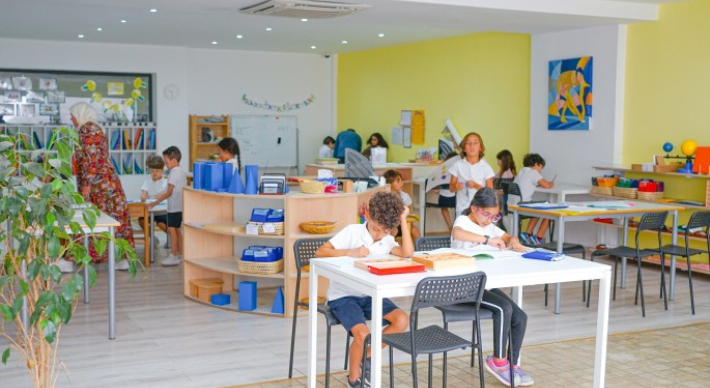
Quality private schools in Morocco design assessment experiences that minimize stress for young children. Testing occurs in small groups or individually. Examiners use warm, encouraging language. Breaks are built in. The goal is to observe the child’s abilities in a calm environment, not to stress them.
Arrive early, ensure your child has eaten and used the toilet, and express confidence that they will do their best. What happens after the exam is the school’s responsibility, not yours. For guidance on what to do after testing, consult our post-assessment guide.
Understanding Entrance Exam Results from Private Schools in Morocco
Schools typically provide written feedback on private school entrance exams in Morocco results, sometimes followed by a meeting with parents and the child. Scores help schools understand your child’s strengths and areas for growth. This information guides appropriate class placement and any support services the school might offer.
Remember: entrance exam performance does not determine your child’s ultimate potential. Many highly successful adults performed modestly on school entrance exams. The exam measures current skills; it does not predict future achievement or intelligence.
Planète Montessori: A Gentle Approach to Assessment
While Planète Montessori does conduct admissions assessments, our approach is gentle and observation-based rather than high-pressure testing. We observe your child in a prepared classroom environment, noting their interests, learning style, and readiness for our program. This approach minimizes stress while providing genuine insight into how your child learns best.
Visit our admissions page to learn more about how we conduct our student observation process.

Conclusion
While private school entrance exams in Morocco can feel intimidating, they serve a genuine purpose: helping schools understand students’ current abilities and ensure appropriate placement. Reasonable, low-stress preparation is appropriate; excessive coaching is not. Trust your child’s abilities, maintain perspective, and remember that entrance exam performance is just one piece of information about your child’s potential. The American Psychological Association offers extensive research on assessment and child development. Approach testing as an opportunity for the school to learn about your child, not as a judgment of your child’s worth.